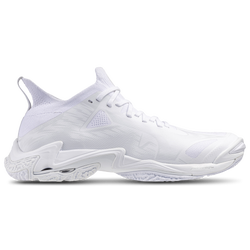
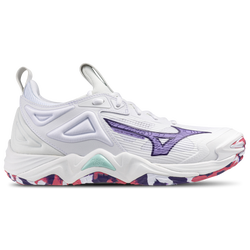
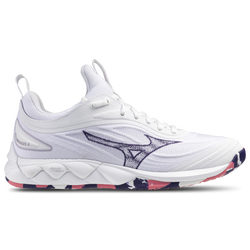
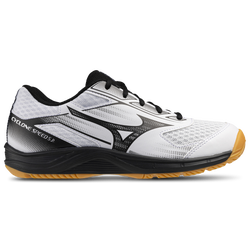
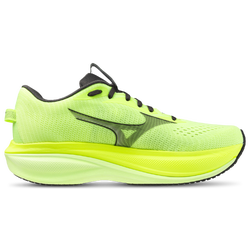
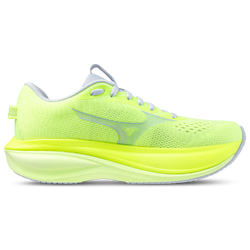
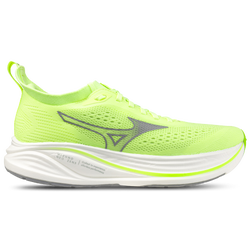
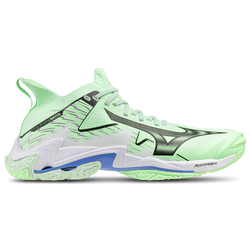
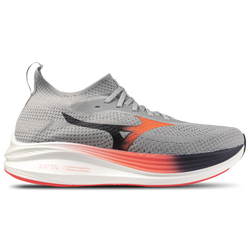
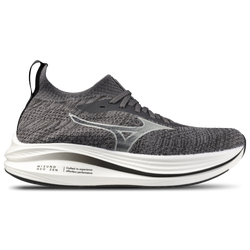
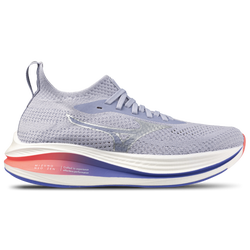
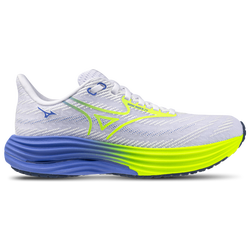
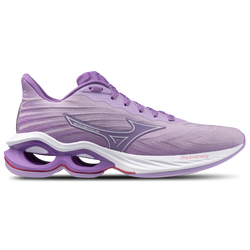
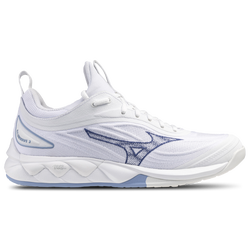
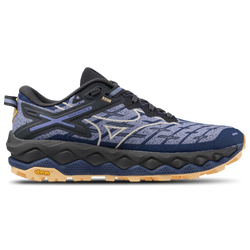
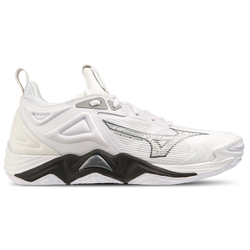
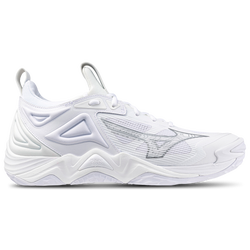
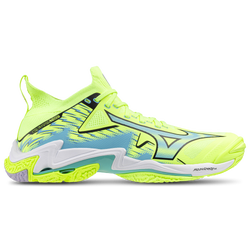
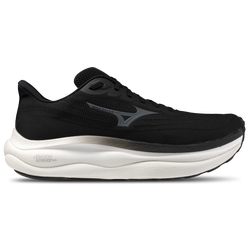
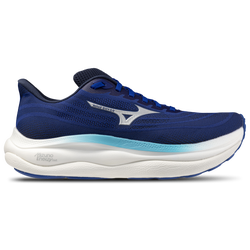
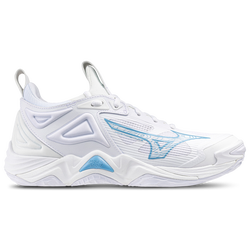
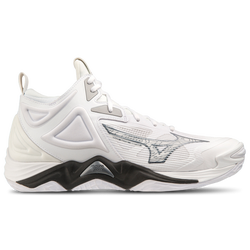
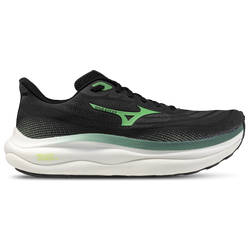
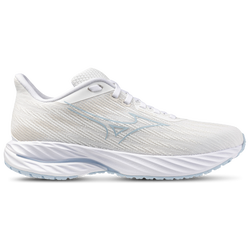
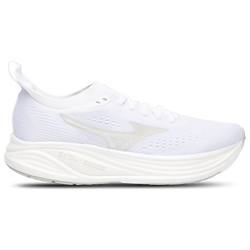
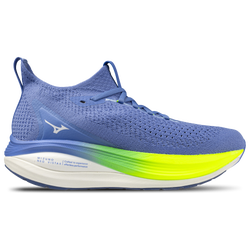
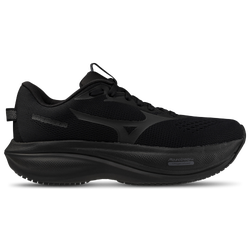
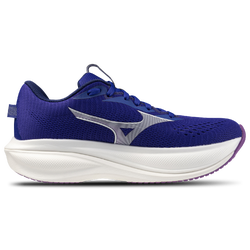
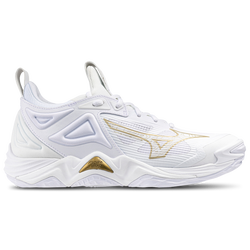
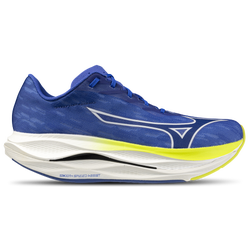
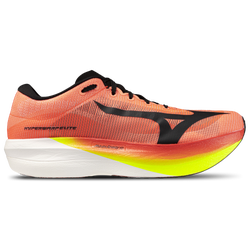
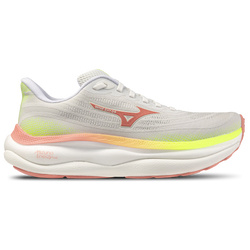
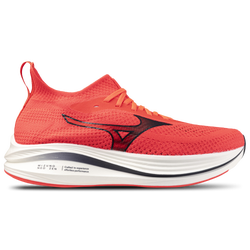
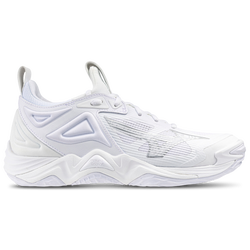
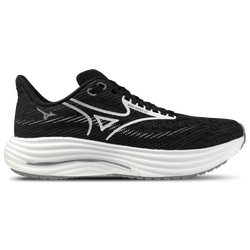
Today, the brand is among the largest manufacturers of sporting goods in the world. They produce equipment, clothing, and accessories for baseball, tennis, softball, golf, running, volleyball, and track and field for men, women, and kids.
Ride the Wave
The team at Mizuno saw that many fellow footwear brands were focused primarily on creating high-performance kicks that prioritized cushioning. Their goal was to create something different that put more focus on driving energy instead of merely softening impact.
In 1997, they developed a lightweight running shoe: the now-beloved Wave Rider 1. Featuring pops of bright color and layers of mesh, it was a quintessential shoe for the decade. Its key selling point: the shoe was capable of producing incredible energy return while cradling the foot in soft stability. The Mizuno team called the technology “Wave.”
The Wave Grows
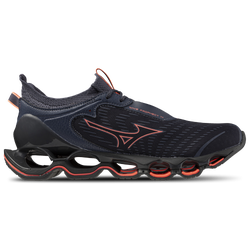
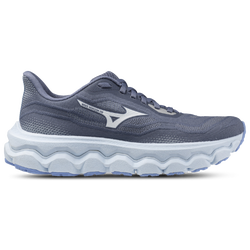
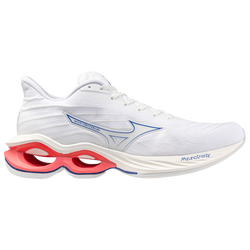
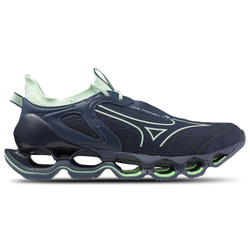
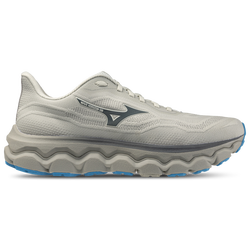
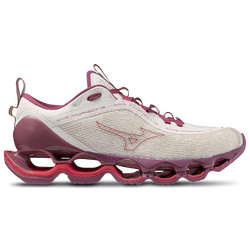
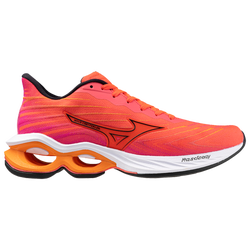
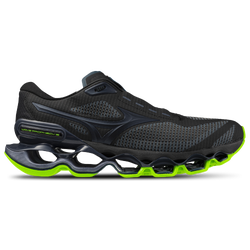
The Wave is fitted into every single Mizuno shoe style. Because it lives between the midsole and outsole, it’s visible to the naked eye and adds a distinctive and unmistakable touch to each pair. The familiar squiggle, so instantly recognizable to enthusiasts all over the globe, is indicative of the shoe’s function. The midsole above it absorbs impact on the move, while the Wave element spreads it quickly throughout the shoe for more even energy return and a smoother run.
Mizuno recognized that not all athletes had the same needs, which is why they produced a variety of different Wave plates to accommodate varying activity and experience levels. Parallel Wave technology is ideal for those who don’t require extensive support, instead providing even impact dispersal from front to back. The Fan Wave minimizes overpronating and helps add stability. The Infinity Wave is ideal for those who need extra-plush cushioning.
Related to Mizuno Shoes
Mizuno Wave Nirvana Shoes, Mizuno Wave Creation Shoes, Mizuno Wave Prophecy Shoes, Mizuno Wave Shoes, Mizuno Wave Rider Shoes, Mizuno Wave Lightning Shoes